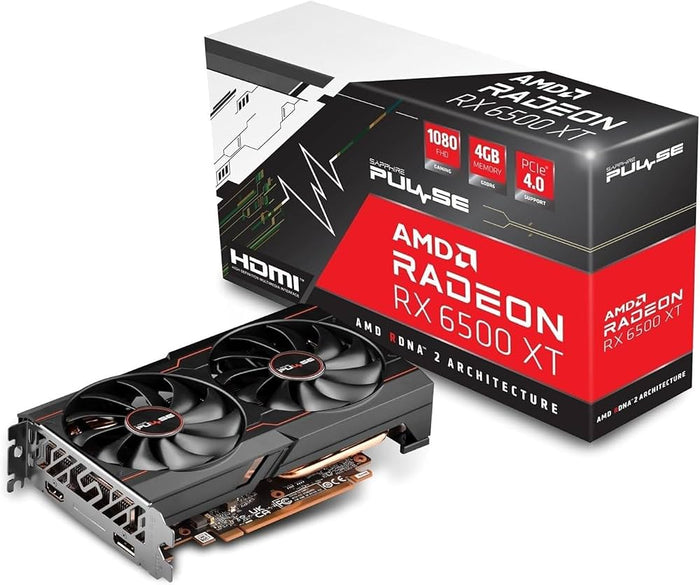

To build an effective PC for AI and machine learning at home, focus primarily on GPU Video RAM (VRAM) rather than raw computing speed. Local AI execution requires loading entire model weights directly into VRAM. A setup with an NVIDIA GPU featuring at least 12GB to 16GB of VRAM, 32GB to 64GB of system RAM, and a fast PCIe 4.0 NVMe SSD offers the ideal sweet spot for running local Large Language Models (LLMs) and image generation workloads smoothly.
What Specs Matter Most for Local AI Work?
When selecting hardware for machine learning, standard gaming benchmarks can be misleading. AI workloads place distinct demands on memory pipelines, compute libraries, and storage systems.
-
GPU VRAM: VRAM is the primary bottleneck for local AI execution. If a model requires 10GB of memory and your graphics card only has 8GB, execution will either crash with an out-of-memory error or spill over into system RAM, causing severe performance drops.
-
CUDA Cores & Tensor Cores: NVIDIA’s CUDA platform serves as the standard runtime for AI frameworks like PyTorch and TensorFlow. Dedicated Tensor Cores accelerate matrix multiplication, drastically speeding up training and inference.
-
System RAM: System RAM holds datasets before they are pushed to the GPU, handles CPU-offloaded model layers, and manages active data transformation pipelines.
-
Storage Speed: AI models comprise massive weight files ranging from 4GB to over 40GB. High-speed PCIe 4.0 or PCIe 5.0 NVMe SSDs significantly reduce model load times into VRAM.
| Hardware Component | Minimum Recommended | Optimal Sweet Spot | Heavy Workstation Tier |
| GPU VRAM | 12GB VRAM | 16GB–24GB VRAM | 24GB+ VRAM (or Multi-GPU) |
| System RAM | 32GB DDR4/DDR5 | 64GB DDR5 | 128GB+ DDR5 |
| Storage | 1TB PCIe 4.0 NVMe SSD | 2TB PCIe 4.0 NVMe SSD | 4TB+ High-End NVMe SSD |
| Power Supply (PSU) | 650W 80+ Bronze | 750W–850W 80+ Gold | 1000W+ 80+ Gold/Platinum |
Why is VRAM More Important Than Raw GPU Tier for AI?
In gaming, a higher-tier GPU with faster clock speeds usually yields higher framerates even with slightly less VRAM. In local AI, available memory capacity dictates whether a model can run at all.
When running Large Language Models or diffusion models like FLUX, the entire file structure must fit inside video memory alongside the active context window. A GPU with lower computing power but higher VRAM can run larger, higher-precision models natively. Conversely, a faster GPU with insufficient VRAM will fail to load those same models unless aggressive quantization is applied, which can reduce output quality.
| Target AI Task | Recommended Model Types | Minimum VRAM Needed | Target GPU Options |
| Entry Level AI / Coding Assistants | 7B/8B Parameter LLMs (Quantized Q4/Q5) | 12GB VRAM | RTX 3060 12GB / RTX 4070 12GB |
| Intermediate LLMs & Image Gen | 14B–27B LLMs, FLUX.1 (FP8/Q5) | 16GB VRAM | RTX 4060 Ti 16GB / RTX 5060 Ti 16GB |
| Advanced Inference & Fine-Tuning | 32B–70B LLMs (Q4), Full Unquantized Gen | 24GB VRAM | RTX 3090 / RTX 4090 / RTX 5090 |
How Do CPU and System RAM Impact Data Science and Machine Learning?
While the GPU handles model inference and neural network training, the CPU and system RAM carry the load during data preprocessing, feature engineering, and model offloading.
System RAM capacity should always equal at least double your GPU's VRAM. Large tabular datasets processed through pandas or NumPy reside entirely in system RAM. Furthermore, runtimes like llama.cpp allow partial layer offloading to system RAM when a model exceeds GPU memory capacity, keeping execution running—albeit at reduced speeds—rather than crashing.
For CPUs, core count and memory bandwidth take precedence over single-core speed. Modern multi-core processors from AMD's Ryzen 7/9 series or Intel's Core i7/i9 lineups handle concurrent data pipelines and background tasks efficiently without creating system bottlenecks.
What Are the Best Budget Tiers for Building an AI PC in India?
Building an AI PC in India requires balancing localized pricing with raw VRAM availability. Tiers are generally defined by target workloads and memory requirements.
Entry Tier: Hobbyist & Learning
Designed for students and developers getting started with machine learning, running quantized 8B LLMs, and basic Stable Diffusion image generation.
-
Core Focus: Maximizing VRAM per rupee spent.
-
Key Components: 12GB NVIDIA GPU, 8-Core CPU, 32GB DDR4/DDR5 RAM, 1TB NVMe SSD.
Mid-Range Tier: Serious Developer & Creator
Targeted at developers building RAG (Retrieval-Augmented Generation) pipelines, running 14B–27B LLMs, and processing high-resolution image diffusion models like FLUX.
-
Core Focus: 16GB VRAM paired with modern system architecture.
-
Key Components: 16GB NVIDIA GPU, modern 8-to-12 Core CPU, 64GB DDR5 RAM, 2TB PCIe 4.0 NVMe SSD.
High-End Tier: Power User & Local Research
For engineers fine-tuning models locally, executing large batch processing jobs, and running heavy 32B to 70B models at functional speeds.
-
Core Focus: 24GB+ uncompromised VRAM with high memory bandwidth.
-
Key Components: 24GB NVIDIA GPU, top-tier multi-core CPU, 64GB to 128GB DDR5 RAM, 4TB PCIe 4.0/5.0 NVMe SSD, high-wattage Gold-rated Power Supply.
FAQ Section
Q: How much VRAM do I need for local AI models?
For entry-level tasks and quantized 8B parameter models, 12GB of VRAM is the practical minimum. To comfortably run 14B–27B parameter models or advanced image generation tools like FLUX in higher precision, aim for 16GB to 24GB of VRAM.
Q: Is a gaming GPU good enough for machine learning?
Yes, consumer NVIDIA gaming GPUs like the RTX series are widely used for local machine learning due to their built-in CUDA and Tensor Cores. As long as the card offers sufficient VRAM for your target models, a gaming GPU provides excellent performance at a fraction of the cost of enterprise workstation hardware.
Q: Do I need a workstation-tier PC for AI work?
No, a dedicated enterprise workstation is not mandatory for home AI development or learning. A properly configured consumer PC featuring an NVIDIA graphics card, adequate system RAM, and fast SSD storage handles the vast majority of local inference, fine-tuning, and data science tasks effectively.
Explore our selection of custom prebuilt gaming PCs or browse our GPU category to find high-VRAM graphics cards tailored for local AI builds.