
How Do You Build a Quiet Gaming PC?
A quiet gaming PC uses efficient components, a case with good airflow, large low-speed fans, a capable CPU cooler and carefully tuned fan curves. The goal is to remove heat without forcing small fans to spin rapidly, because high fan speeds are a major source of gaming PC noise.
A silent PC is not necessarily a completely noiseless PC. Under heavy gaming loads, the graphics card and processor generate heat, so some fan activity is normal. A good build keeps everyday noise very low and avoids sudden, distracting changes in fan speed.
The quietest results usually come from balancing performance rather than choosing the fastest available parts. A power-hungry GPU inside a restricted case may be difficult to silence, while an efficient GPU with strong airflow can remain quiet at the same gaming performance target.
Which Components Matter Most for Noise?
The graphics card is often the loudest component during gaming because its fans respond to GPU temperature and power consumption. The CPU cooler, case fans, power supply and storage devices also contribute to the total noise level.
Component selection should focus on efficiency, cooler quality and the ability to run at low fan speeds. A larger heatsink or radiator can dissipate the same amount of heat with slower fan rotation.
The quietest build is often quieter because each component produces less heat and needs less cooling. Noise reduction is therefore partly an acoustic problem and partly a power-efficiency problem.
What Makes a Case Good for Noise Dampening?
A good quiet PC case combines solid construction, controlled airflow and enough space for large cooling hardware. Sound-dampening panels can reduce high-frequency fan noise, but they should not block all ventilation.
Look for thick side panels, secure panel mounts, rubber isolation points and a front panel that allows enough air into the case. Some cases use foam-lined panels, while others rely on steel construction and carefully designed airflow paths.
The best quiet PC case recommendations are not always the cases with the most insulation. A heavily restricted front panel can increase temperatures, forcing fans to spin faster and producing more noise than an open mesh case with slow fan speeds.
Select the case according to the complete build. Confirm CPU cooler height, graphics card clearance, radiator support, fan positions and power supply compatibility before ordering.
Should You Choose Air Cooling or Liquid Cooling?
For most quiet gaming PCs, a large air cooler is the simplest starting point. It has no pump, requires less maintenance and can remain quiet when paired with a slow-spinning fan and an efficient processor.
Liquid cooling can be quiet when the radiator is large enough and the pump operates at a low noise level. However, an all-in-one cooler adds pump noise and may produce more sound than a good air cooler at low and moderate loads.
Are liquid coolers quieter than air coolers? Not automatically. A liquid cooler may be quieter for a high-heat processor when its radiator provides more cooling area, but a well-selected air cooler is often quieter, simpler and more reliable for a balanced gaming build.
How Do You Choose Quiet Case Fans?
Fans are central to any silent build component picks list. Choose fans with reliable bearings, smooth motor operation, low minimum speeds and a wide control range through the motherboard or fan controller.
Larger fans can move the required amount of air at lower rotational speed than smaller fans. This generally helps reduce motor noise and turbulence, provided the case supports the larger size.
Do not compare fans only by their maximum airflow figure. A fan that is quiet at its normal operating speed may be more useful than one that offers a higher maximum speed but becomes loud during gaming.
Check the following specifications:
-
Supported fan size.
-
Airflow for open case panels.
-
Static pressure for radiators and restrictive filters.
-
Minimum and maximum speed.
-
Bearing type.
-
Noise rating.
-
PWM control.
-
Included anti-vibration mounts.
Use airflow fans for open intake and exhaust positions, and choose static-pressure models where the fan must push air through a radiator, dense filter or restricted panel. Avoid running every fan at maximum speed by default.
How Should You Set Fan Curves?
A fan curve controls how quickly fans respond to rising temperatures. A poorly configured curve can make a PC noisy because the fans repeatedly speed up and slow down during short temperature changes.
Start with a low-speed setting at idle and moderate temperatures. Increase fan speed gradually as CPU or GPU temperature rises, then test the system during an actual gaming session.
Case fans can often be controlled according to CPU temperature, GPU temperature or a combination of both. Since the GPU is usually the main heat source during gaming, a fan curve that responds only to CPU temperature may not provide the best balance.
A sensible tuning process is:
-
Confirm that all fans are detected by the motherboard or controller.
-
Set a low stable speed for idle operation.
-
Increase speed gradually at higher temperatures.
-
Test a demanding game for an extended session.
-
Listen for sudden speed changes and adjust the curve.
-
Check that temperatures remain within the component manufacturer’s limits.
Do not reduce fan speeds so aggressively that components remain excessively hot. The aim is controlled, predictable noise—not silence at the cost of thermal stability.
Which CPU Is Best for a Silent Gaming PC?
The best CPU for a quiet gaming PC is one that delivers the required gaming performance without producing unnecessary heat. Higher power consumption creates a larger cooling challenge and may require faster fan speeds.
Choose the processor according to the target games, resolution and graphics card. A CPU that is unnecessarily powerful for the GPU can increase system heat without improving the gaming experience.
Enable supported power-efficiency features and use a reasonable power limit when appropriate. A small reduction in CPU power may have little effect on gaming performance while reducing heat and fan noise, particularly in a balanced system.
Make sure any power-limit or undervolting change remains stable. Test games and applications thoroughly because unstable settings can cause crashes, errors or data loss.
How Do You Choose a Quiet Graphics Card?
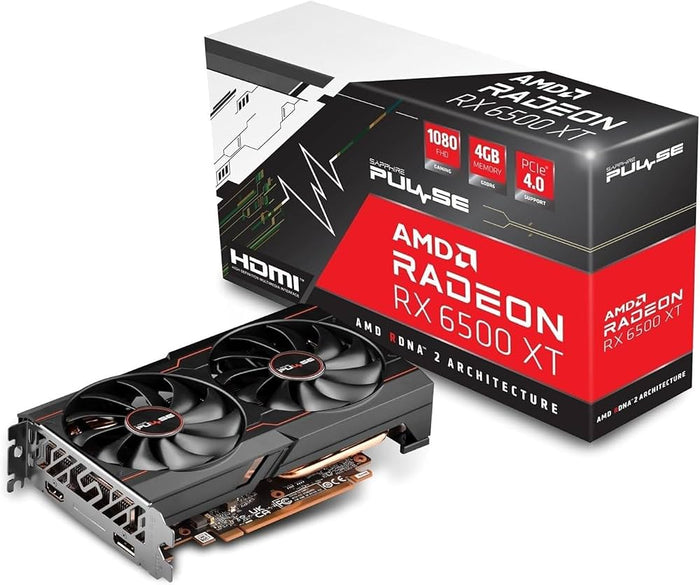
Graphics card noise depends on the GPU’s power draw, cooler design, fan curve and case airflow. A large heatsink with multiple fans can often remain quieter than a compact card with a small cooler handling the same workload.
Look for graphics cards with a semi-passive mode if you want the fans to stop during light desktop use. During gaming, the fans will usually activate, but a large cooler may keep them at a lower speed.
Coil noise is separate from fan noise and can vary between individual cards. It may become more noticeable at very high frame rates, so setting a suitable frame-rate limit can sometimes reduce electrical noise and unnecessary GPU power draw.
Do not choose a lower-performing GPU solely to reduce noise if it cannot meet your gaming requirements. Instead, select a model with an effective cooler, provide adequate case airflow and tune the power or fan settings carefully.
What Power Supply Is Best for a Silent Build?
A quality power supply contributes to a quiet PC through efficient operation, stable power delivery and controlled fan behaviour. Some models use a semi-passive mode that keeps the fan off or slow during light workloads.
The power supply should provide enough capacity for the processor and graphics card without operating continuously at an unnecessarily high load. Check the manufacturer’s recommended system power guidance and the PSU’s connector requirements.
Avoid overspending on wattage while buying a lower-quality unit. Build quality, protections, efficiency, warranty and acoustic behaviour matter more than the largest number printed on the box.
Place the PSU according to the case’s intended airflow direction. Do not block its intake with a carpet, wall or dust-filled filter.
Can You Build a Silent Gaming PC Without Sacrificing Performance?
Yes, a silent PC can still be a powerful gaming PC when the parts are selected around efficiency and cooling. You may need to avoid extreme power consumption, compact low-capacity coolers and restricted cases.
The main trade-off is often peak noise rather than gaming performance. A high-performance build can remain quiet at the desktop and during light gaming, but heavy workloads may require audible fan speeds to maintain safe temperatures.
For most Indian gaming setups, a balanced configuration is more practical than an extreme silent build. It can deliver strong performance while keeping noise low during normal use.
How Do You Reduce Vibrations and Background Noise?
Fans are not the only source of sound. Vibrations from fans, hard drives, pumps and loose panels can travel through the case and become more noticeable than the original component.
Use rubber fan mounts, secure all panels and check that screws are properly tightened without over-tightening them. If the system contains a mechanical hard drive, isolate it using the case’s rubber mounts or replace it with an SSD for completely silent storage.
Keep the PC on a stable surface rather than a hollow desk shelf that amplifies vibration. Avoid placing the rear or front intake directly against a wall, as restricted airflow increases fan speed.
Regular maintenance also affects noise. Dust buildup reduces heatsink and filter performance, causing fans to work harder. Clean the system carefully and inspect fans for rattling, grinding or unusual vibration.
What Is the Best Silent PC Build Strategy?
Build around the graphics card and target gaming resolution, then choose an efficient CPU, large cooler, quiet case fans and an appropriate case. The case should provide a clear airflow path without forcing fans to run at high speed.
Use an SSD, a reliable power supply and a motherboard with useful fan-control options. Avoid unnecessary RGB controllers, extra drives and cable clutter if they add heat, obstruction or background software.
The best silent build component picks should work together:
-
Efficient CPU matched to the GPU.
-
Graphics card with a capable cooler.
-
Large CPU cooler with a quiet fan.
-
Spacious case with good airflow.
-
Large PWM case fans.
-
Quality power supply with quiet operation.
-
SSD instead of a mechanical hard drive.
-
Tuned fan curves and sensible frame-rate limits.
A quiet PC is the result of the whole system—not one “silent” product. The right case and fan curve cannot fully compensate for excessive heat from an unsuitable CPU or GPU.
Frequently Asked Questions
Can a silent PC still be a powerful gaming PC?
Yes, a silent PC can deliver powerful gaming performance when it uses efficient components, strong cooling and a well-ventilated case. The system may become audible during demanding games, but it can remain very quiet at idle and during lighter workloads.
The main compromise is usually peak noise, size or power consumption. Choosing a slightly more efficient component or applying a stable power limit can reduce noise without a major gaming performance loss.
What makes a PC case good for noise dampening?
A good noise-dampened PC case uses solid panels, secure mounting, vibration isolation and enough airflow for fans to operate slowly. Foam or acoustic material can reduce sound, but excessive restriction may increase temperatures and fan noise.
Look for a case that supports large fans, has clear intake and exhaust paths, and uses rubber mounts for fans or drives. Airflow and construction quality are more important than insulation alone.
Are liquid coolers quieter than air coolers?
Liquid coolers are not automatically quieter than air coolers. A large liquid cooler can handle a high-heat CPU at lower radiator-fan speeds, but the pump introduces another possible noise source.
For many gaming PCs, a large air cooler is simpler and very quiet. Choose liquid cooling when the case layout, processor heat output and radiator support make it a practical advantage.
Read StudBudPC’s quiet PC maintenance guide, then compare the recommended quiet fan guides before choosing components for a low-noise gaming PC.