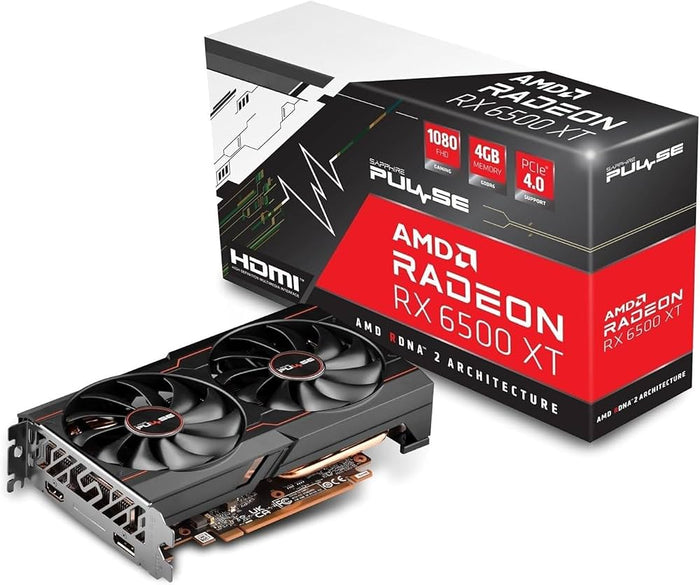

To record and edit gaming clips without dropping FPS, use your GPU’s built-in encoder—NVIDIA NVENC, AMD AMF, or Intel QuickSync—via lightweight software like NVIDIA ShadowPlay, AMD Adrenalin, or OBS Studio's replay buffer. Capture clips directly to an NVMe SSD at 1080p 60 FPS, then use free software like CapCut or DaVinci Resolve to trim, format, and render your highlights.
What Tool Stack Do You Need for Recording and Editing Gaming Clips?
Building an efficient clipping workflow doesn't require spending money on expensive software subscriptions. You can handle everything from instant replay capture to final color correction using lightweight, free applications.
Your tool stack splits into three core categories:
-
Recording Software: Use hardware-integrated recording tools like NVIDIA ShadowPlay (GeForce Experience/NVIDIA App) or AMD Software: Adrenalin Edition for background clipping. If you want multi-track audio separation—keeping your voice, game sound, and Discord on separate audio tracks—use OBS Studio with its Replay Buffer feature enabled.
-
Storage Allocation: High-bitrate video generates massive files quickly. Save your raw recordings to a high-speed internal drive—ideally a secondary NVMe SSD—to prevent system stuttering during heavy gameplay save writes.
-
Editing Software: For quick 9:16 vertical clips targeted at TikTok, Instagram Reels, or YouTube Shorts, CapCut Desktop provides automated auto-captions and fast render presets. For higher quality 16:9 gameplay compilations, DaVinci Resolve offers professional timeline trimming, audio leveling, and precise render settings at zero cost.
What PC Hardware Requirements Are Needed to Record and Edit Clips?
Recording gameplay while running a modern game puts concurrent stress on your hardware. If your system isn't configured correctly, recording can cause micro-stuttering or dropped frames in your clips.
The Importance of Hardware Encoders
Never use software encoding (x264/CPU encoding) while gaming on the same system. Software encoding forces your CPU to compress video frames, taking processing cycles away from game logic and causing frame rate drops. Modern graphics cards feature dedicated hardware video encoders—such as NVIDIA's NVENC or AMD's AMF—that handle video compression on an isolated chip block. This allows your graphics card to record 1080p or 1440p footage with an average frame rate impact of under 3% to 5%.
Storage Speed and Capacity
Mechanical hard drives (HDDs) struggle to write continuous, uncompressed or high-bitrate video streams while a game is actively loading assets. A PCIe NVMe M.2 SSD is essential for smooth background replay buffers. High-bitrate 1080p 60 FPS footage requires around 30 to 50 Mbps bitrate, meaning a single minute of footage takes up roughly 250 MB to 400 MB of space.
CPU and RAM Thresholds
A modern 6-core processor is the minimum baseline for playing modern games while running background recording software and Discord. For memory, 16 GB of DDR4 or DDR5 RAM is the absolute entry point, though 32 GB is highly recommended if you keep editing applications like DaVinci Resolve open while gaming.
What Is the Fastest Clip Editing Workflow from Capture to Export?
The goal of a beginner clipping workflow is to go from an in-game play to a published highlight in less than five minutes without cluttering your storage drives.
-
Set Up a Replay Buffer: Open your recording application and set the Instant Replay length to 30 or 60 seconds. Assign an easy hotkey (such as
Alt + F10) to save clips instantly when something notable happens in-game. -
Configure Your Bitrate and Resolution: Set your recording resolution to match your monitor (typically 1080p or 1440p) at a locked 60 FPS. Set your video bitrate between 35 Mbps and 50 Mbps. Higher bitrates improve visual fidelity during fast motion but increase file sizes.
-
Organize Source Drives: Route raw capture files to a designated
Raw Clipsfolder on your secondary SSD. Keep your main OS drive clear to maintain system responsiveness. -
Trim and Crop: Import saved clips into your editor. Cut out dead time before and after the action. If converting a 16:9 widescreen clip into a vertical format, center the game's crosshair or camera focus point within the 9:16 frame.
-
Export with Correct Bitrate: Export 1080p clips using the H.264 or HEVC (H.265) codec at a bitrate of 15 Mbps to 20 Mbps for social media upload. This matches platform compression standards without needlessly bloating file size.
FAQ
Q: What software should I use to record gameplay clips? For the easiest setup with minimal performance impact, use NVIDIA ShadowPlay if you have a GeForce GPU or AMD Adrenalin if you run a Radeon card. If you need to separate your microphone, Discord chat, and game sound onto different audio tracks for cleaner editing, use OBS Studio with the Replay Buffer feature enabled.
Q: Do I need a powerful PC to record and edit clips? No, you do not need a high-end system, provided your graphics card includes a dedicated hardware encoder like NVENC or AMF. A mid-range PC with a modern 6-core CPU, 16 GB of RAM, an NVMe SSD, and a GTX 1650 or RX 6600 or higher can handle 1080p 60 FPS clip capture smoothly.
Q: How much storage do gameplay recordings use? At a standard recording quality setting of 1080p 60 FPS with a 40 Mbps bitrate, gameplay footage uses approximately 300 MB of storage per minute. A 30-second replay clip uses around 150 MB, meaning 100 saved clips will occupy roughly 15 GB of storage space.
Upgrading your storage drive or GPU is the fastest way to eliminate recording lag—explore our full catalog of high-speed NVMe SSDs and graphics cards at StudBudPC