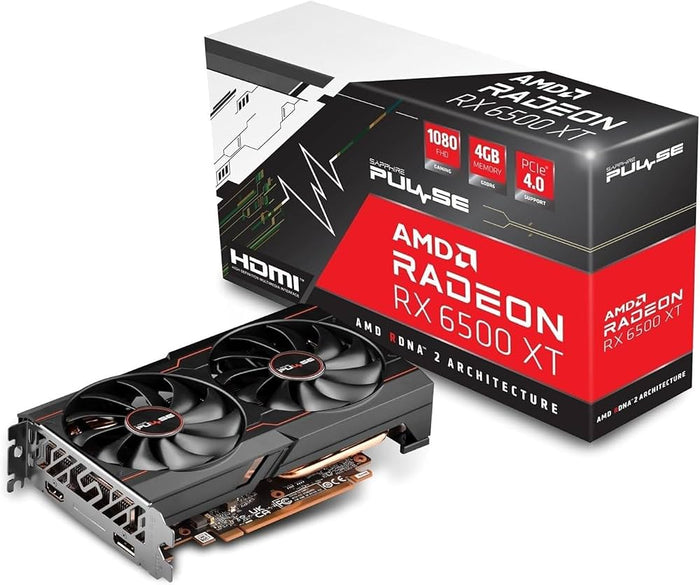

To set up a dual monitor workspace, plug your second screen directly into your discrete graphics card using a DisplayPort or HDMI cable. Right-click your desktop, select Display settings, click Identify to position the virtual displays matching their physical placement, select your primary gaming display, and choose Extend these displays under the multiple displays dropdown.
What Cables and Hardware Do You Need for a Dual Monitor Setup?
Before configuring software, ensure your graphics card and second monitor have matching video outputs and proper cabling.
Always connect both monitors directly to the ports on your dedicated GPU rather than the motherboard's I/O panel. If your primary gaming screen occupies your main DisplayPort connection to run high refresh rates (like 144Hz or 240Hz), your secondary monitor can connect via a secondary DisplayPort or an available HDMI port.
| Display Port / Connection | Max Bandwidth / Feature | Best Use Case | Cable Recommendation |
| DisplayPort (1.4 / 2.1) | High bandwidth; supports high refresh rates + G-Sync / FreeSync | Primary gaming monitor | DisplayPort to DisplayPort Cable |
| HDMI (2.0 / 2.1) | Wide compatibility across monitors, TVs, and secondary displays | Secondary productivity or chat monitor | High-Speed HDMI Cable |
| USB-C / DisplayPort Alt Mode | Transmits video signal and power over a single cable | Portable secondary screens or laptop extensions | Thunderbolt / USB-C Display Cable |
How Do You Configure Windows Settings for a Dual Monitor Setup?
Once both screens are powered on and cabled to your GPU, Windows will detect the secondary panel automatically. You must align the virtual desktop layout to match your physical desk arrangement.
1. Arrange Physical Screen Placement
Open Settings > System > Display. Click the Identify button to reveal a number on each screen. Drag screen 1 and screen 2 in the diagram to mirror their actual physical position on your desk. This ensures your mouse cursor moves seamlessly across the boundary between the monitors.
2. Set Primary Display and Display Mode
Scroll down to the Multiple displays section and choose Extend these displays so each monitor functions as an independent desktop area. Click on your main high-refresh-rate gaming panel in the diagram above and check the box marked Make this my main display. This guarantees that full-screen games launch on your primary screen by default.
3. Adjust Refresh Rates Independently
A secondary 60Hz screen will not force your primary display down to 60Hz if configured properly in Windows. Go to Advanced display settings, select your gaming monitor, and manually verify that its refresh rate is set to its maximum rated speed (such as 144Hz, 165Hz, or 240Hz). Repeat the check for your second monitor.
What Are the Best Use Cases for a Second Monitor in Gaming and Streaming?
Adding a second panel changes how you interact with your PC during long gaming sessions and daily workflows.
1. Second Monitor for Streaming Chat and Discord
For live streamers and competitive gamers, a dual monitor gaming setup isolates communication tools away from your active game window. Keep OBS Studio, Twitch chat, or Discord voice channels open on screen two to monitor stream health and read community messages in real-time without constantly alt-tabbing out of your match.
2. Enhanced Multi-Tasking and Productivity
Beyond gaming, a second monitor doubles your available screen real estate for work and content creation. You can full-screen a video editor, coding environment, or reference documents on one screen while taking notes, editing text, or managing web research on the other.
Frequently Asked Questions
Q: Can I use two different-sized monitors together?
Yes, you can use two monitors of different physical sizes, resolutions, or aspect ratios together without issue. Windows handles individual scaling and resolution settings for each screen independently. You can manually adjust their relative positions in Windows Display Settings so your cursor transitions smoothly across screens despite size differences.
Q: Does a second monitor affect gaming FPS?
Running a second monitor displaying static content (like Discord, web pages, or Spotify) has a negligible impact on gaming FPS (typically less than 1% to 2%). However, playing high-bitrate video streams, hardware-accelerated video content, or background rendering tasks on your second monitor can cause minor GPU overhead or frame pacing stutters on budget hardware.
Q: What cable do I need for a second monitor?
You should use a DisplayPort or High-Speed HDMI cable that matches an open video output on your discrete graphics card and an available input on your second monitor. For high-refresh-rate primary screens, DisplayPort is recommended, while standard HDMI cables are completely sufficient for secondary 60Hz or 75Hz productivity displays.
Looking to expand your desktop workspace or elevate your dual-screen ergonomics? Explore our full collection of gaming displays and monitor arms at StudBudPC to find the ideal mounting gear and monitors for your setup.